Agent Governance Runtime
Full power inside.
Full control outside.
Agents run with full OS access. Every external interaction is governed — policy-checked, credential-injected, and audited — without touching agent code.
A new kind of actor
Software does what it's told. People make decisions and own the consequences. An AI agent is both — it executes like software, but reasons and decides like a person.
That gap matters. An agent won't stop itself from doing something harmful, and it can be manipulated in ways a human wouldn't fall for. It needs its own kind of boundary — one that gives it real capabilities while keeping everything auditable and revocable.
Can you answer these today?
When agents touch real systems, basic operational questions become unanswerable.
What did every agent do last week?
Which agent has access to customer data?
How do we limit blast radius if something goes wrong?
How do we prove to compliance what agents executed?
How do we revoke a misbehaving agent instantly?
How do we enforce cost and request budgets?
Ad-hoc IAM, scattered logs, and human supervision work for one agent. They break at ten. They become a liability at one hundred.
How it works
The Control Boundary
Every agent runs inside an isolated sandbox with full OS access. All external interaction passes through a transparent governance boundary — the Control Boundary.
The agent doesn't know it's there. It makes normal HTTP calls. The boundary intercepts, evaluates policy, injects credentials, logs everything, and either allows or denies — all at the network layer.
Enforced by infrastructure — not application code
Transparent proxy
All outbound traffic intercepted via TLS MITM. Agents make normal HTTP calls — the proxy evaluates every request against OPA policy.
Credential injection
Agents never hold API keys. The proxy fetches secrets from Vault and injects them into outbound requests. The agent code never sees them.
Full audit trail
Every request decision logged with identity, destination, method, path, policy result, budget state, and latency. Queryable. Exportable.
Budget enforcement
Per-capability and per-task request budgets enforced atomically at the proxy. Agents get graceful warnings before hard limits.
Workload identity
Every agent gets a per-task cryptographic token. Every action is attributable. Tokens expire with the task — leaked tokens are short-lived.
DNS control
Per-workspace domain allowlists. Unauthorized domains get NXDOMAIN. No DNS bypass, no direct internet. Fail-closed by default.
Product
See it in action
From configuration to live operations to analytics.
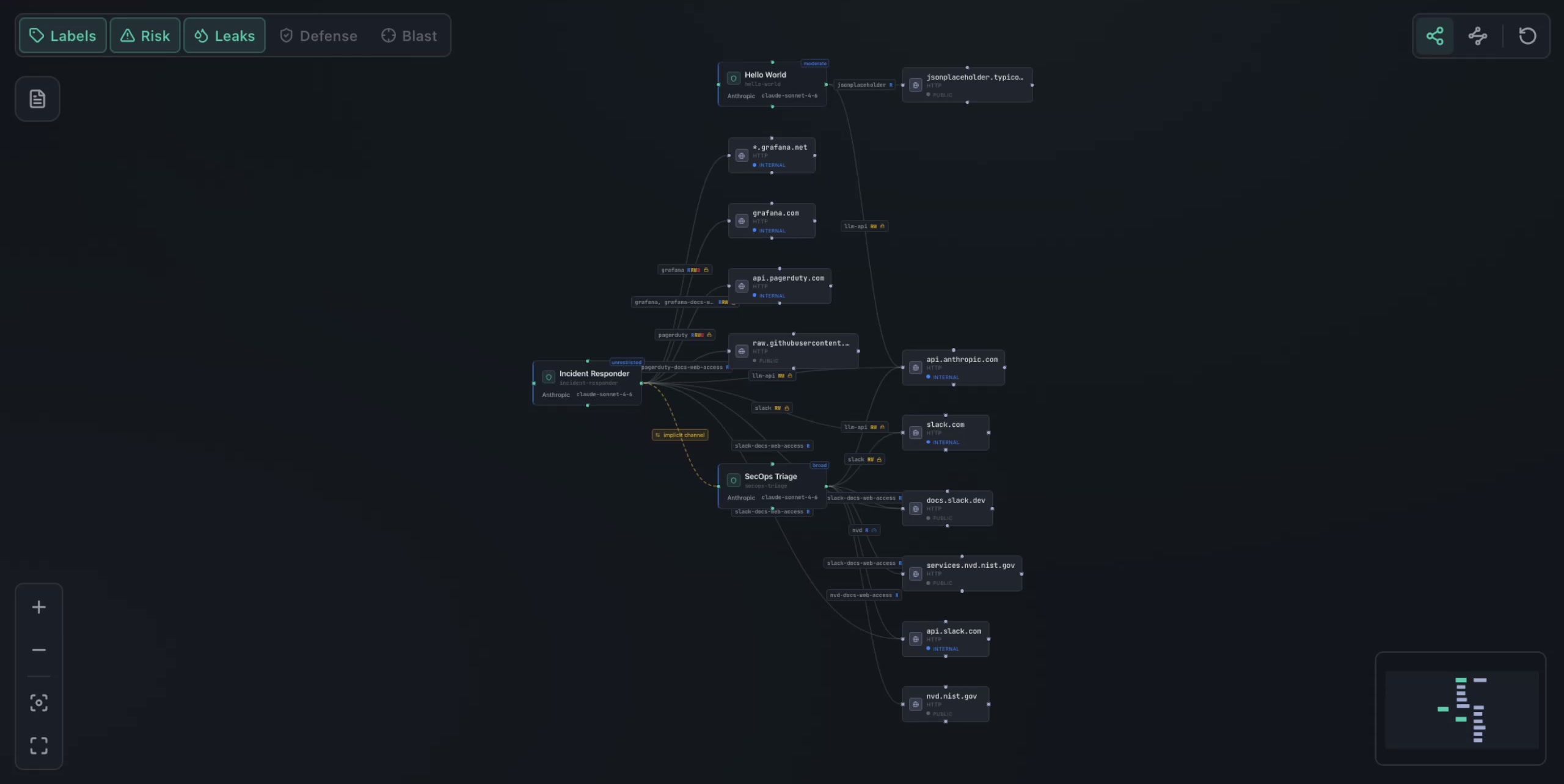
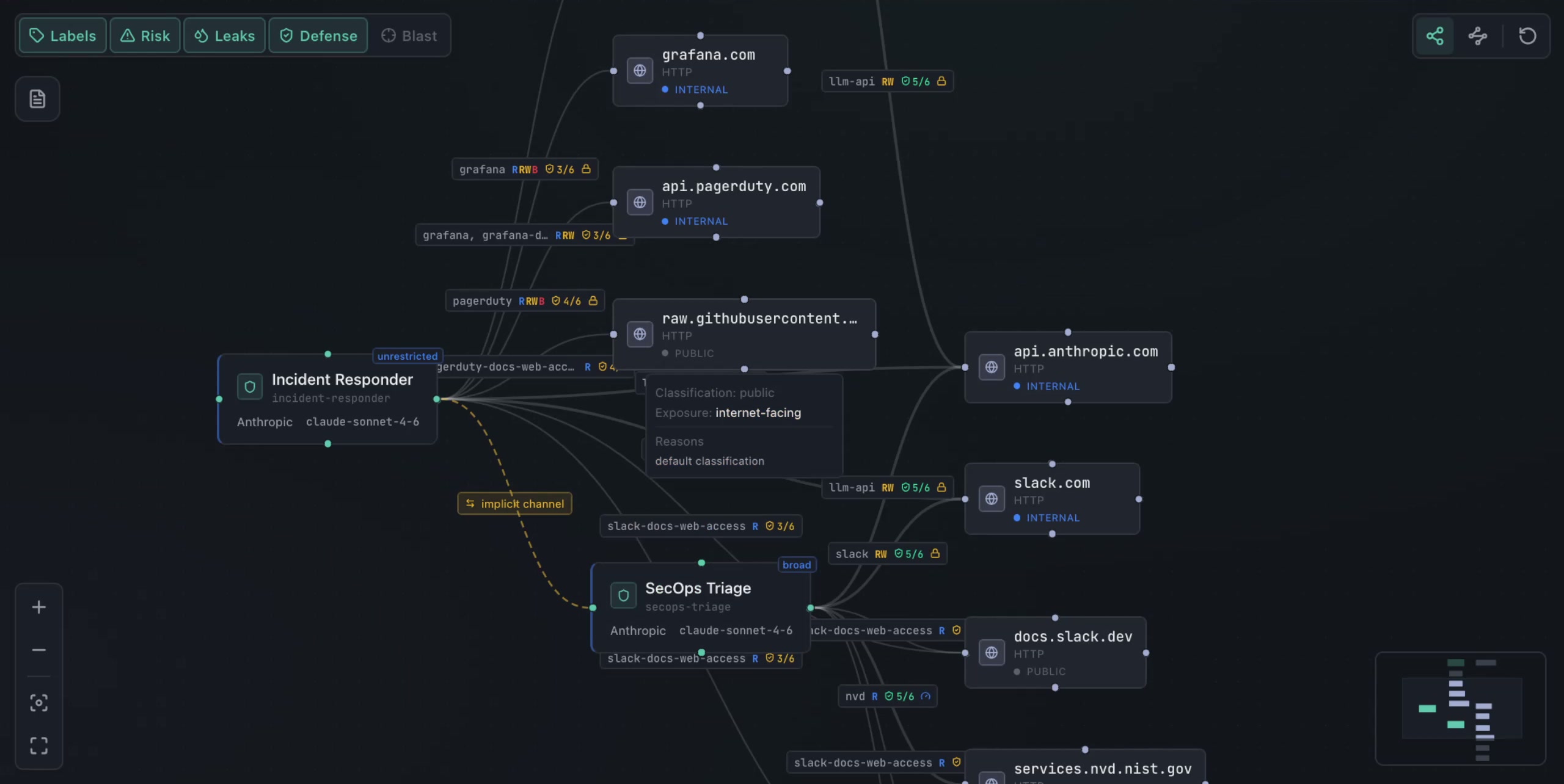
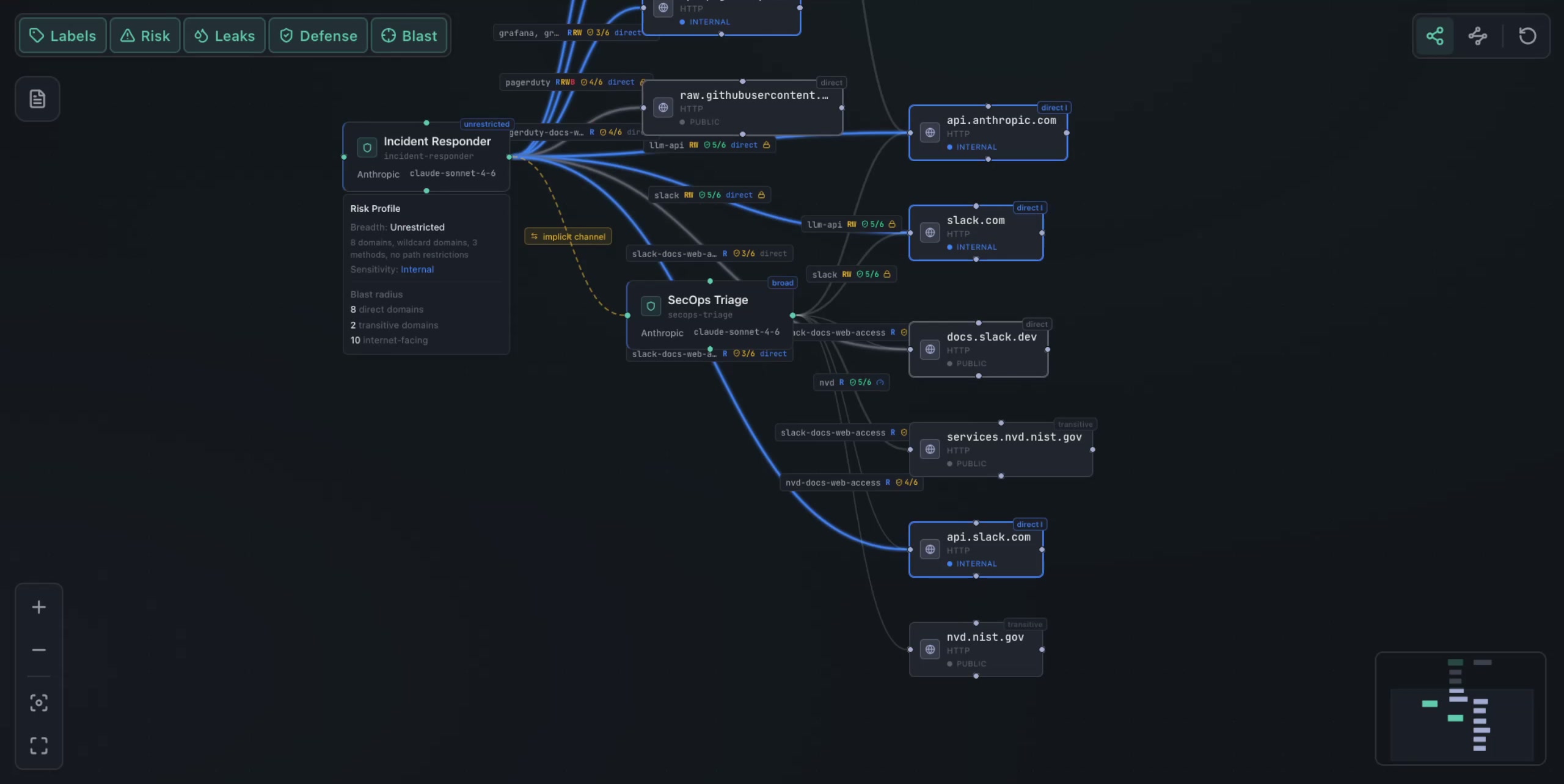
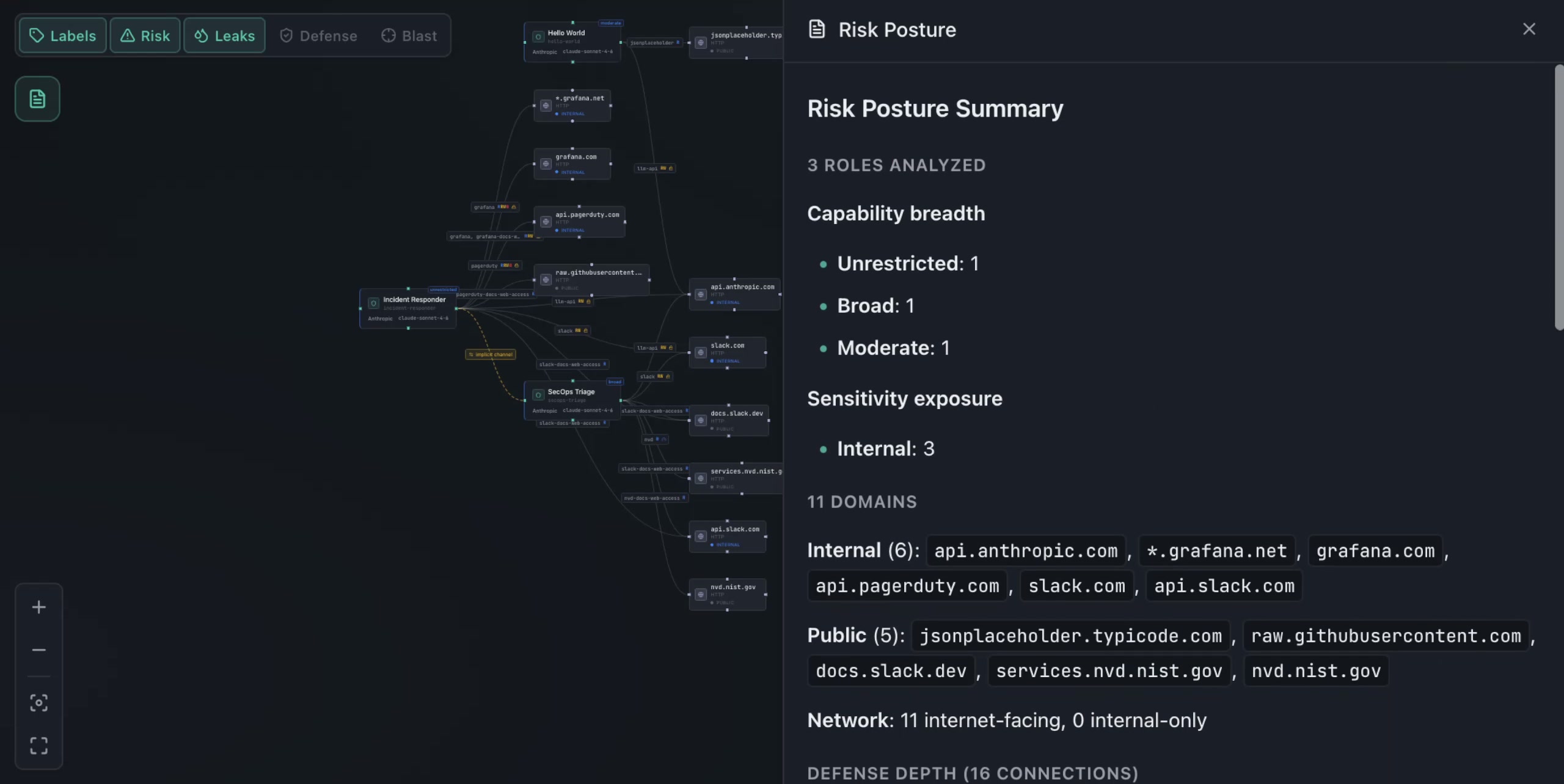
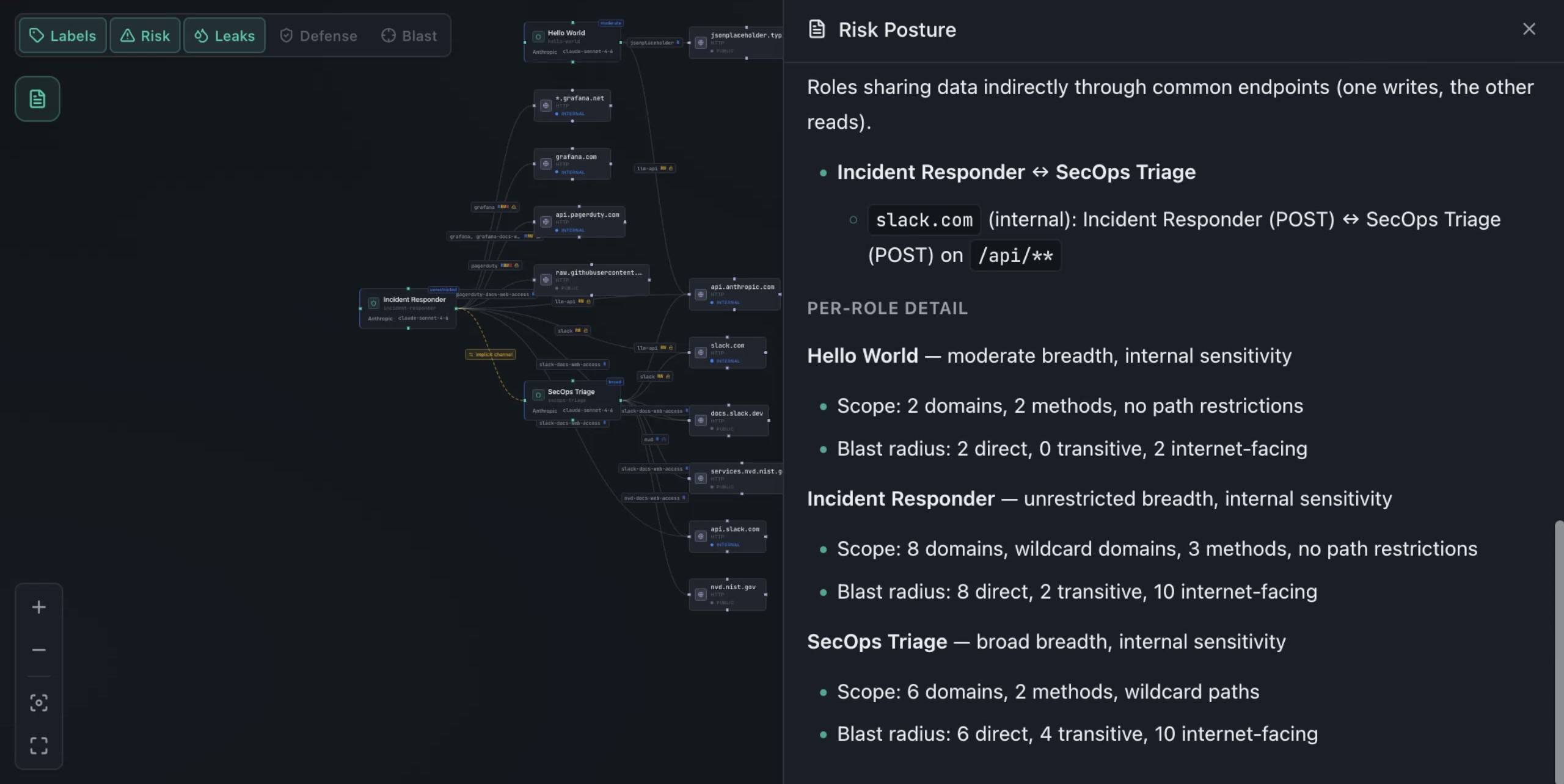
Define what agents can reach
Role topology shows every connection before an agent runs — APIs, methods, credentials, budgets.
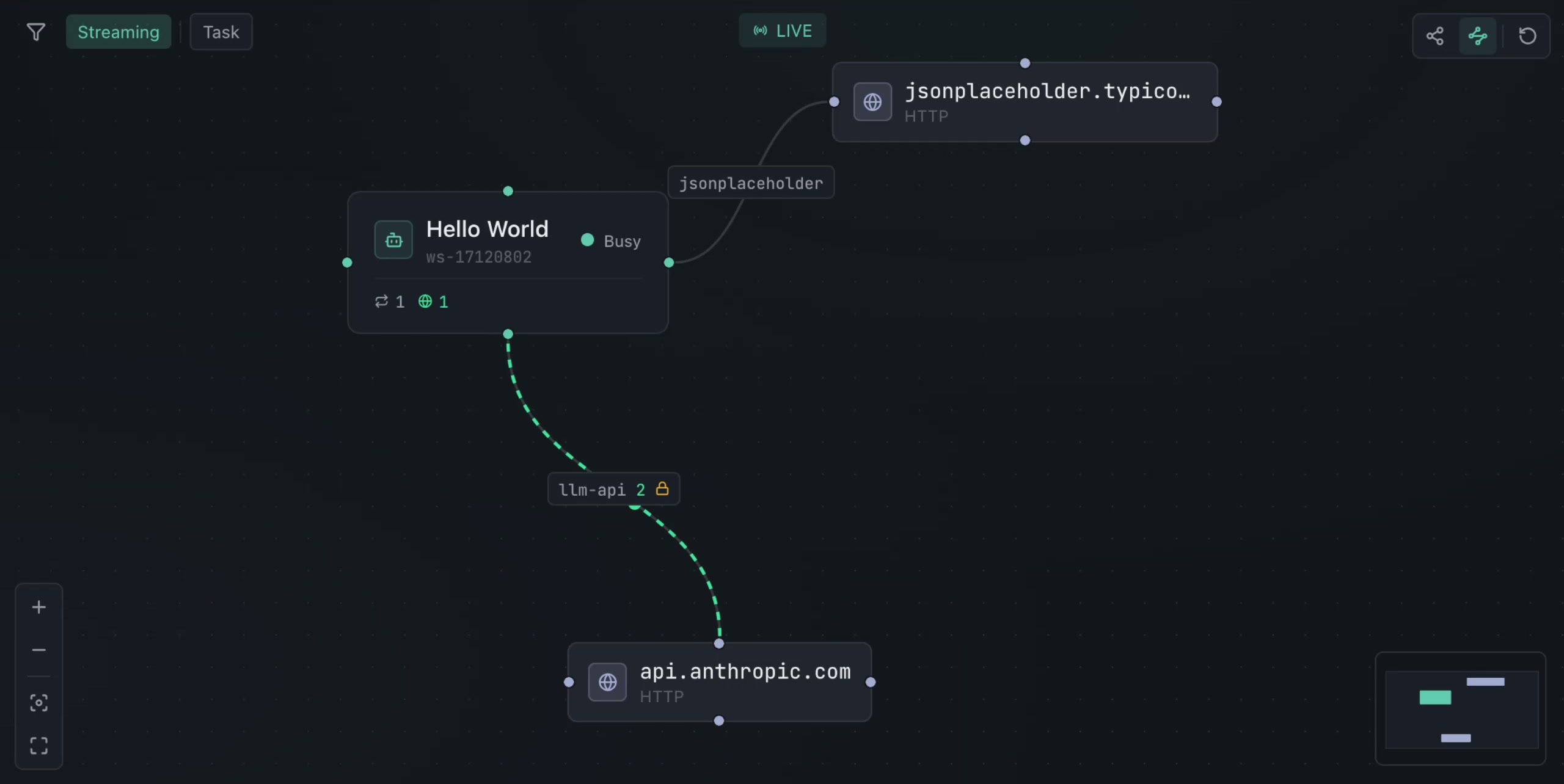
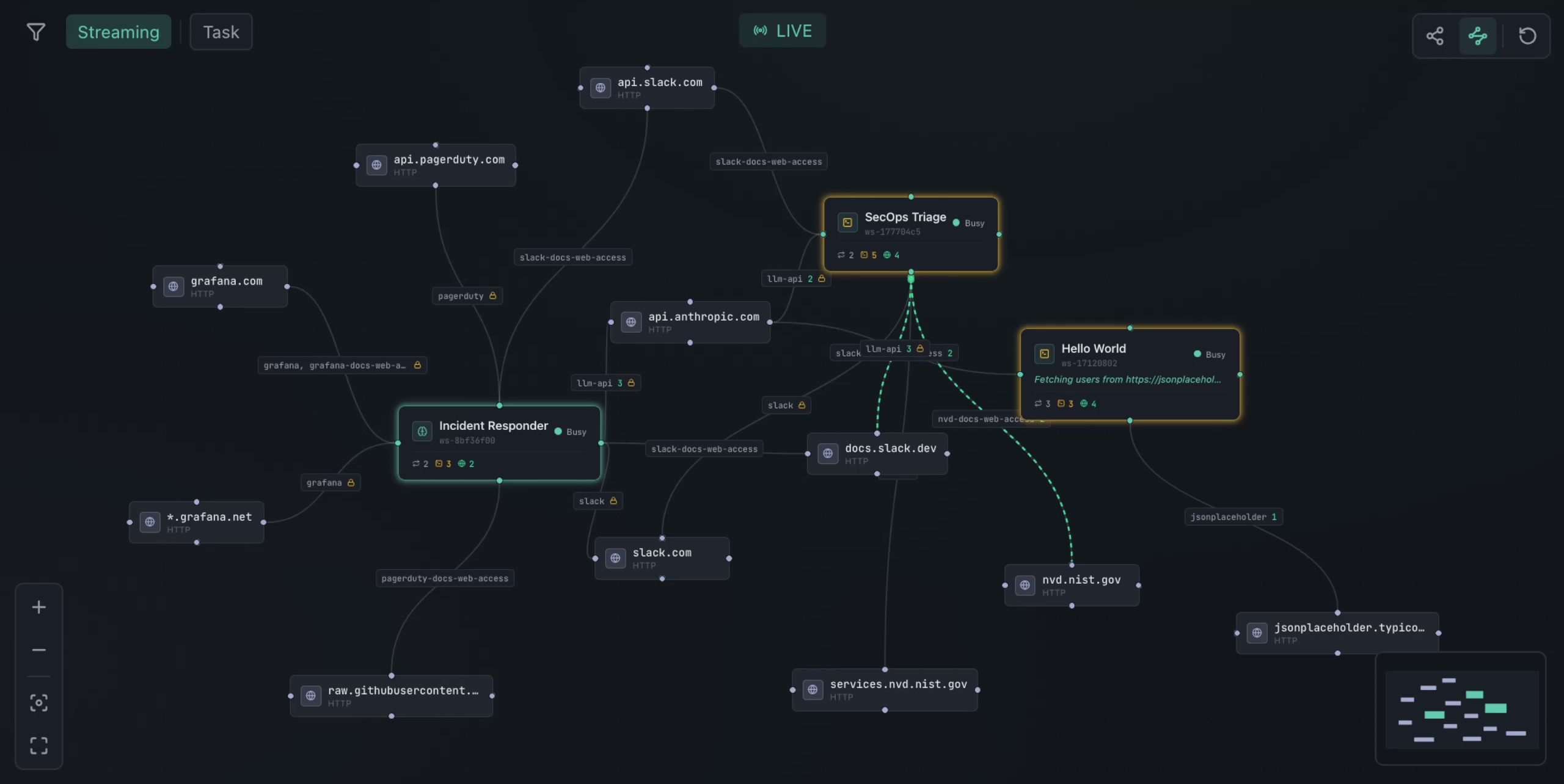
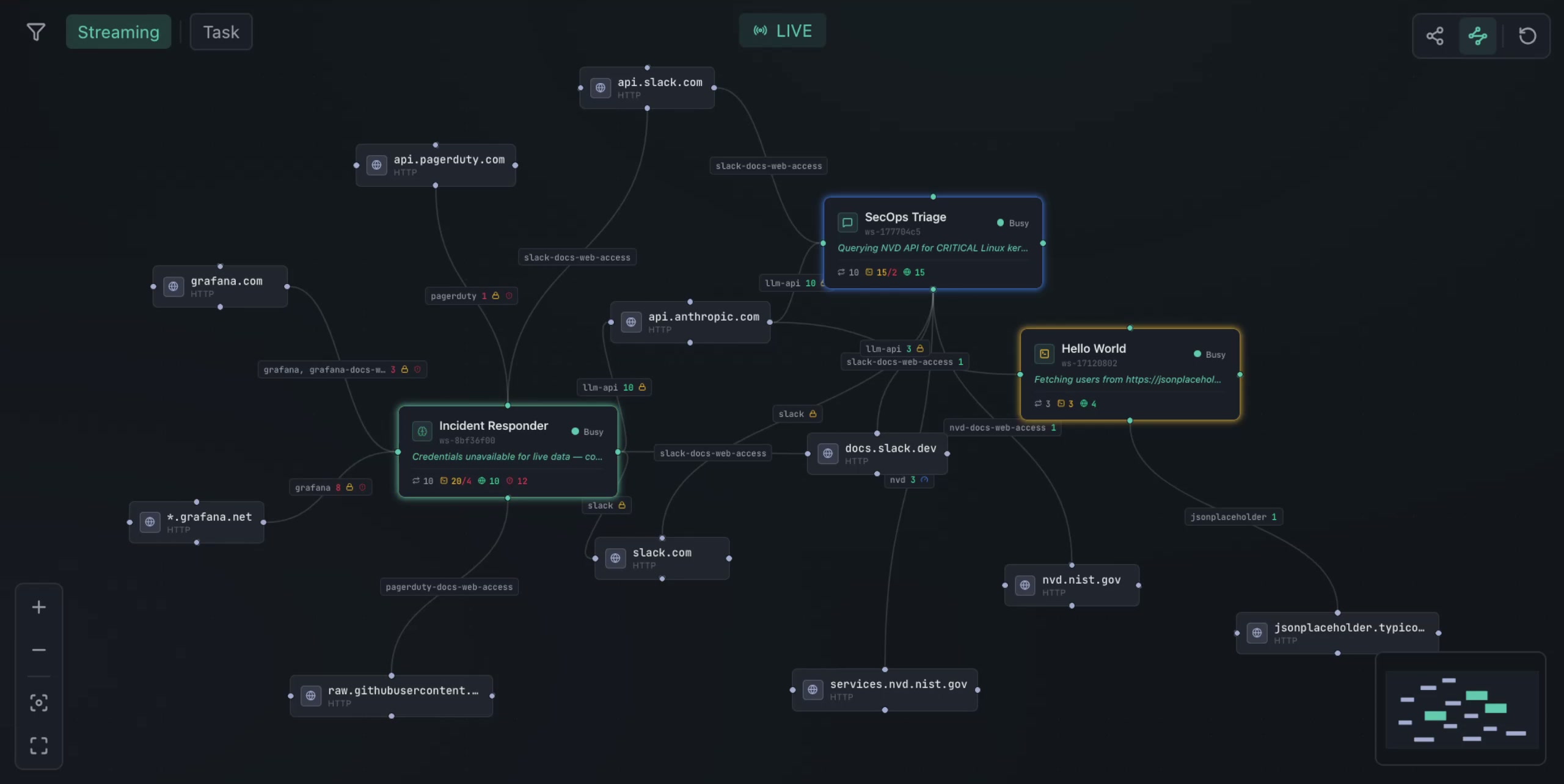
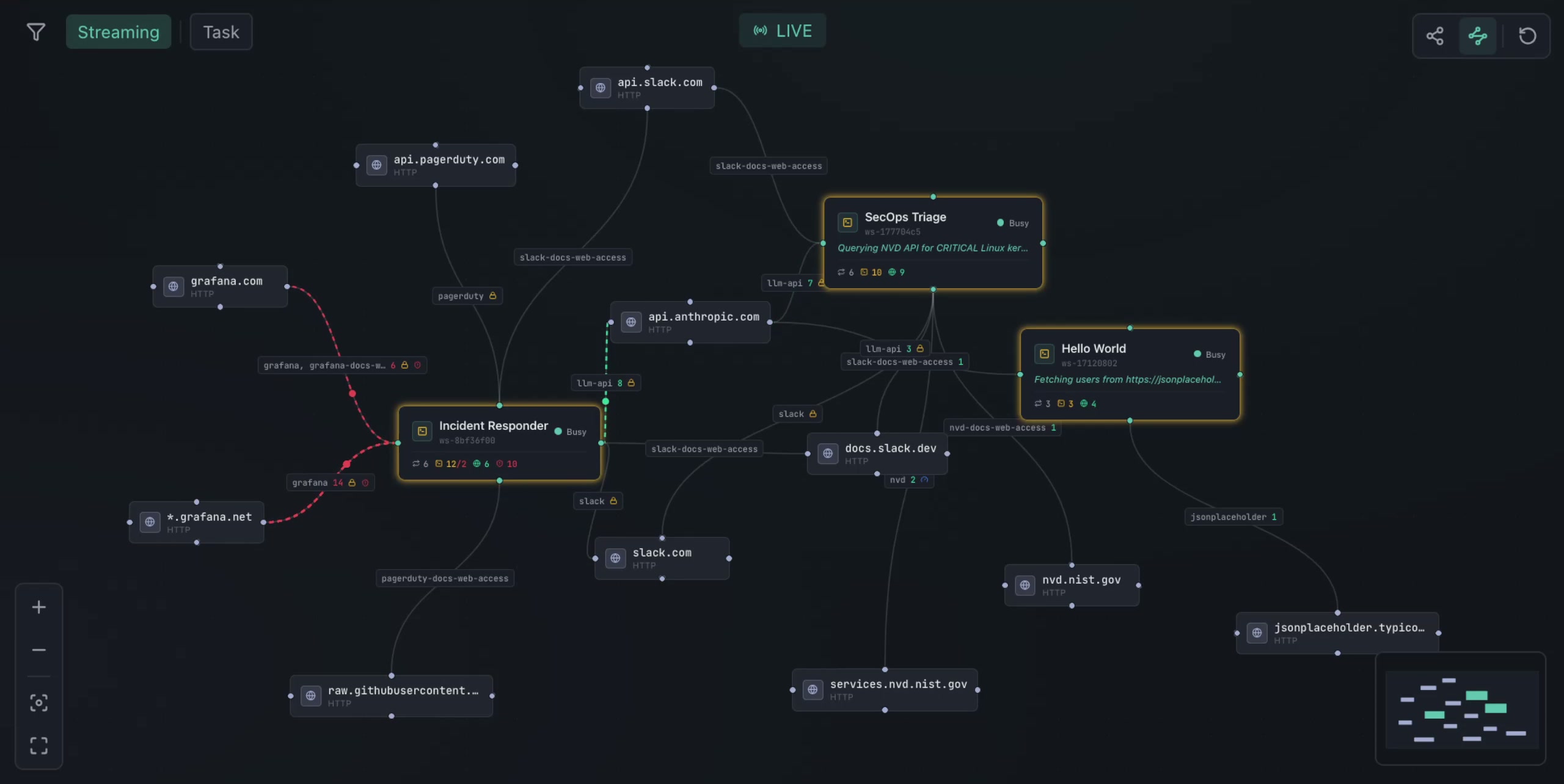
Watch agents work in real time
See every request as it happens. Not a log viewer — a live operational view.
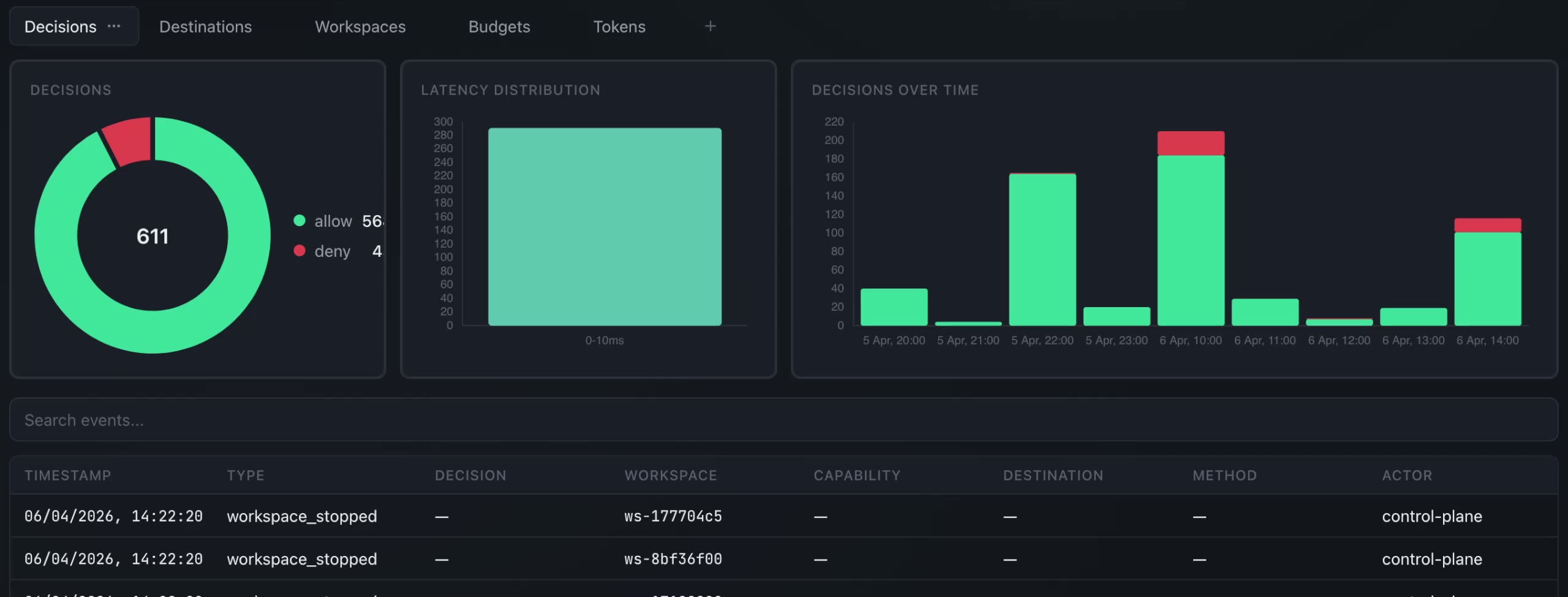
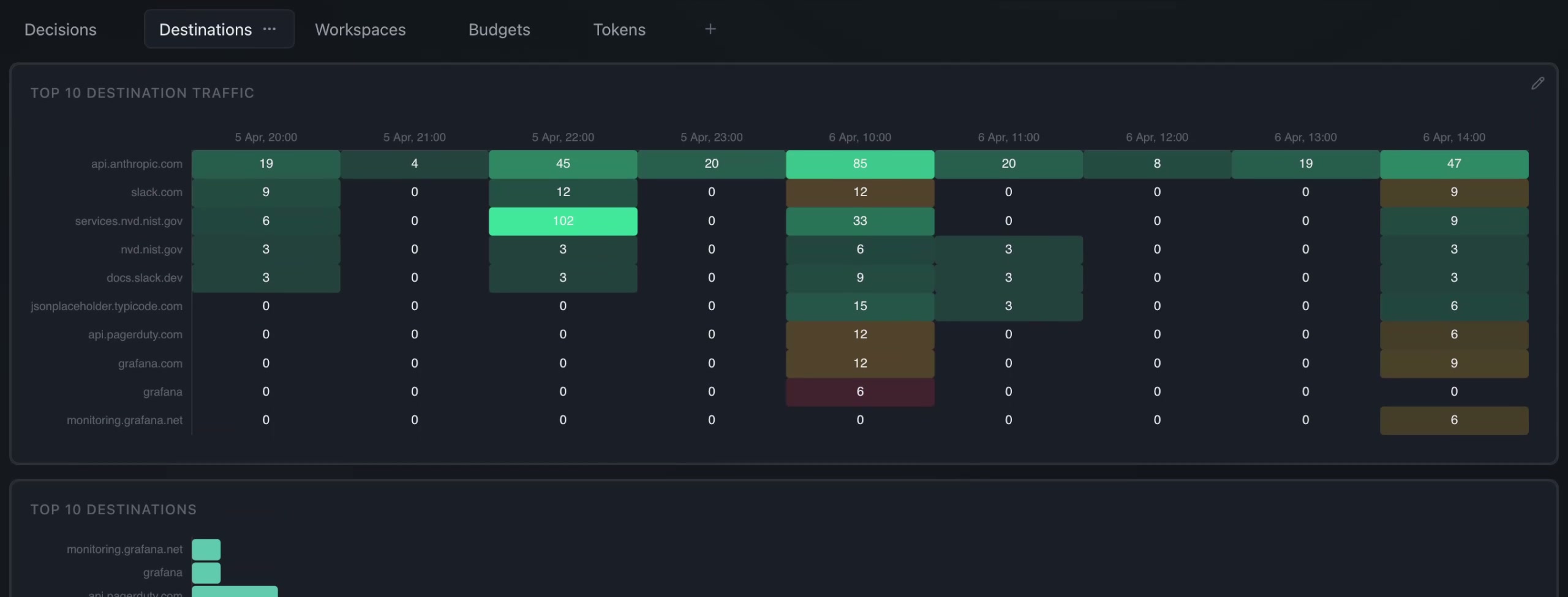
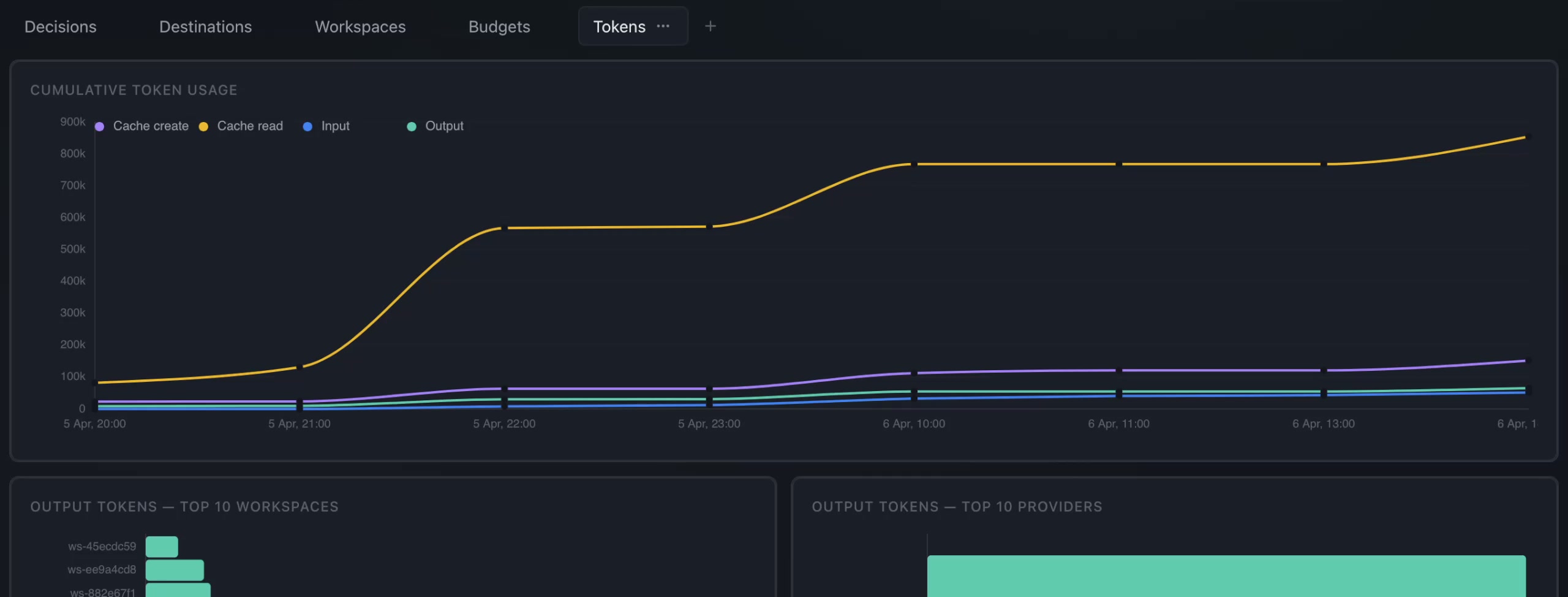
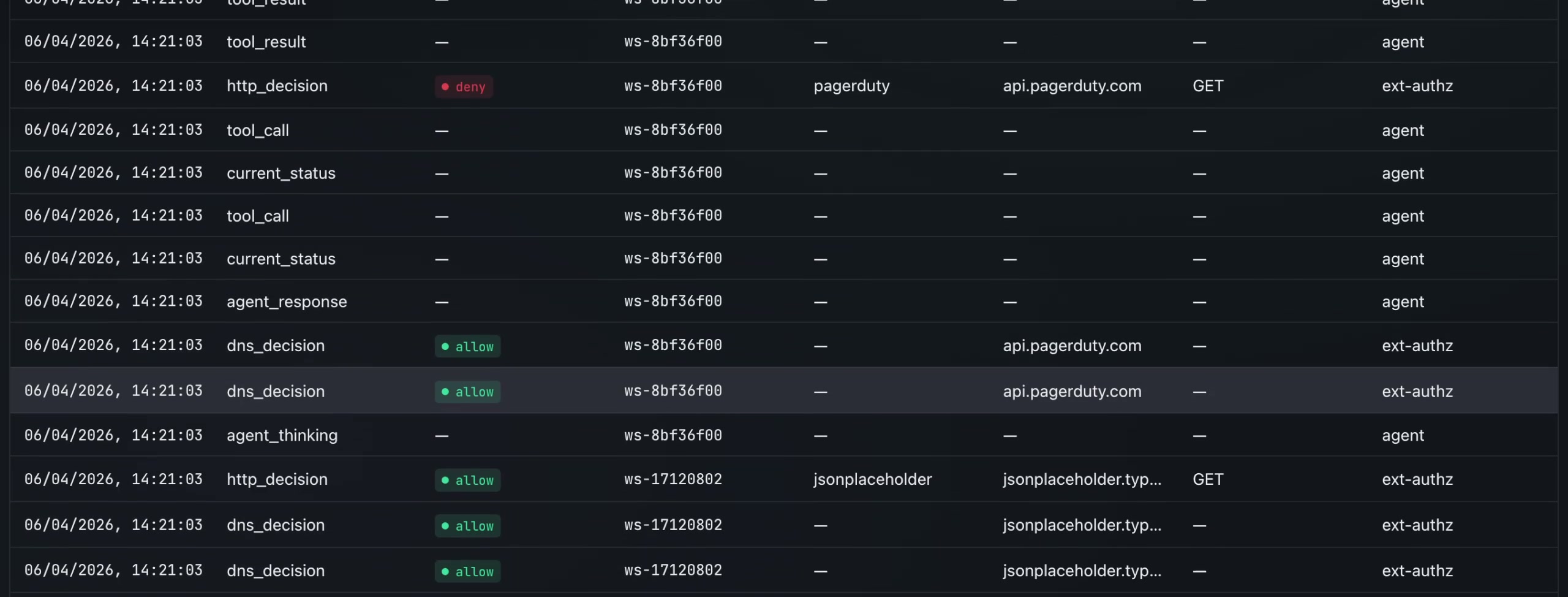
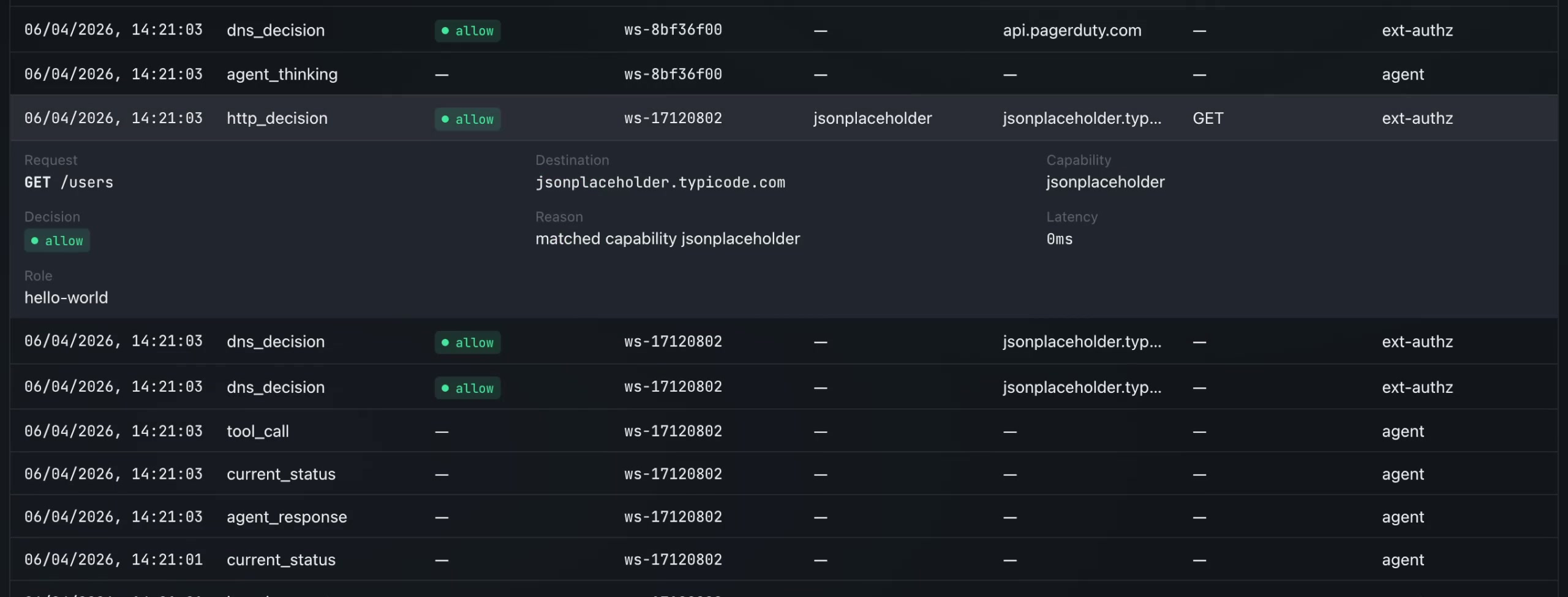
Every decision. Queryable.
Operational intelligence across your entire agent fleet.
Governance doesn't restrict.
It unlocks.
Start simple: an agent starts a service and reports back when it exits. That's automation you already know.
Now give it a playbook. If the service crashes, the agent diagnoses the failure, restarts it, and — if it keeps failing — writes a postmortem and pings your team on Slack. A cron job just became an on-call responder.
The agent itself never touches Slack. It spins up a second agent that has only those permissions. Each agent gets exactly the access it needs — nothing more. That's what governance makes possible.
Built on proven infrastructure
Ready to govern your agents?
See the platform in action. Or book a demo and we'll show you how full power and full control work together.
Live governance in 40 seconds